Flake epoxy in Ottawa, thrown to rejection
The speckled floor you have seen in the best garages is a flake floor. Thousands of small vinyl chips are thrown into wet resin and sealed under clear. Done fully, it is the most practical resin floor there is: it hides dirt, adds grip, and forgives a slab that has had a hard life.
At a glance
- What it is
- Vinyl flakes in resin, under a clear topcoat
- Coverage
- Full broadcast as standard
- Flake size
- Quarter-inch is the garage standard
- Feel
- Lightly textured, like fine orange peel
- Best for
- Garages, basements, workshops, mudrooms
What a flake floor actually is
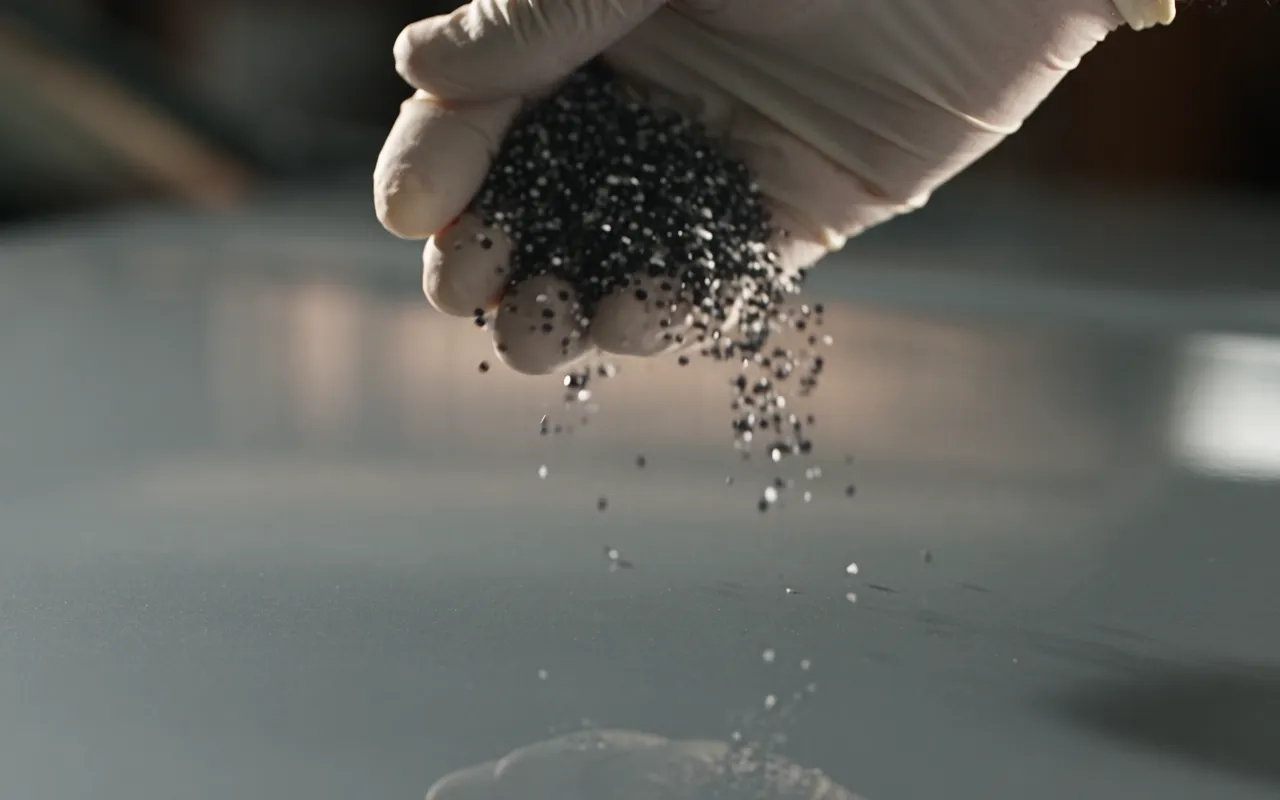
A flake floor, also called a chip floor, starts like any other resin floor: ground concrete and a pigmented base coat. The difference is what happens next. While the base is still wet, coloured vinyl flakes are thrown up into the air and allowed to fall into it. They land flat, sink slightly and are held as the resin sets.
The flakes themselves are thin, random-shaped chips of coloured acrylic and vinyl, a little like dried paint. They are made in dozens of solid colours and mixed into blends, which is how one floor can read as warm grey from the door and reveal black, white and blue specks when you stand on it.
Once the base has hardened, the surface is scraped to knock down any chips standing on edge, vacuumed, and sealed under one or two clear coats. The finished floor is a sandwich: resin, a dense layer of flake, and clear resin on top. The flake is not decoration sitting on the surface. It is part of the thickness of the floor.
That build is the point. A full flake floor is noticeably thicker than a plain coloured coating, and thickness is what takes the knocks.
Full broadcast, and why the amount of flake matters
There are two ways to flake a floor. In a full broadcast, flake is thrown until the wet base cannot hold any more and the surface is completely covered. Installers call this broadcasting to rejection, because the floor rejects the extra flake, which is swept up afterwards. In a partial broadcast, a light or medium amount is sprinkled on and the base colour shows between the chips.
They look related. They do not perform alike. With a full broadcast, the topcoat sits on a continuous layer of vinyl, the texture is even, and the pattern hides almost anything: dust, salt haze, tire marks, a repaired crack. With a light sprinkle, most of the floor is still smooth coloured resin, so it marks, shows dirt and is slippery when wet in a way a full floor is not.
A light broadcast uses a fraction of the flake and less clear coat, so it costs less to install. That is the usual reason it is offered. If you are comparing two prices for a flake floor, the first question to ask is how much flake each one includes. Use the floor designer on the main page to see the three coverages side by side.
Coverage, compared
- Full broadcast
- Flake covers the floor completely. Thickest, most texture, hides the most. The standard for garages.
- Medium
- Base colour shows through between chips. A lighter look for basements and low-traffic rooms.
- Light sprinkle
- A scattering of flake on a solid floor. Mostly decorative.
- Clear coats
- A full broadcast needs more clear to seal it. One generous coat, or two.
- Texture
- Set by how hard the floor is scraped and how much clear goes on top.
Ask every installer which coverage their price is for.
Design your floor
Choose a finish and a colour and the floor below is redrawn. It is the quickest way to find out whether you are a flake person, a metallic person or a plain grey person.
Finish
Colour
Flake coverage
An illustration drawn in your browser, not a colour match. Real samples are laid on your own slab, in your own light, before you choose.
Flake sizes
Flake is graded by the mesh it passes through. Size changes the look more than most people expect.
Choosing a colour blend
Flake blends are mixed from four or five solid colours, and the proportions decide the mood. More white brightens a room. More black sharpens the pattern. A touch of blue, tan or rust ties the floor to the cabinets, the car or the brick outside.
For a garage that gets used, mid-tone blends with real contrast do best. Road salt dries white, mud dries brown and tire rubber is black, so a floor with all three in it shows none of them. Pale, low-contrast blends look wonderful in a showroom and show every tire track at home. Very dark blends turn grey with salt dust by February.
The base coat colour matters as well. Under a full broadcast it is almost invisible, but it is what you see if the floor is ever deeply scratched, so it is chosen to match the blend.
Do not choose from a screen, this one included. Flake looks different in daylight at the door and under the lights at the back of the garage. Samples are laid on your own slab, and that is where the decision should be made.
Why flake epoxy suits Ottawa garages in particular
Flake epoxy became the default garage floor in cold cities for practical reasons, and Ottawa has all of them. The first is salt. From December to March a car brings home a white crust that dries on whatever it lands on. On a plain grey floor it shows as tide marks by the second week of winter. On a speckled floor with white and grey in the blend it simply disappears into the pattern until you next mop.
The second is grit. The sand and fine gravel the City spreads on side streets ends up on the garage floor, where tires grind it in. A smooth coating shows that wear as dull tracks. A full flake floor has a textured surface and a thick clear coat over a layer of vinyl, so the same grit has far less to show for its efforts.
The third is the slab itself. Ottawa garages are rarely perfect. They have control joints, a patch where a plumber once went looking for a drain, hairline cracks from thirty winters of frost. A solid colour draws a line around every one of those. A flake pattern breaks the eye up, so a properly filled crack is very hard to find again.
And the fourth is wet boots. For much of the year the garage is the way into the house. The light texture left by the flake gives a foothold that a glassy floor does not, and it can be increased with a fine grit in the topcoat where the steps come down.
How the flake goes down
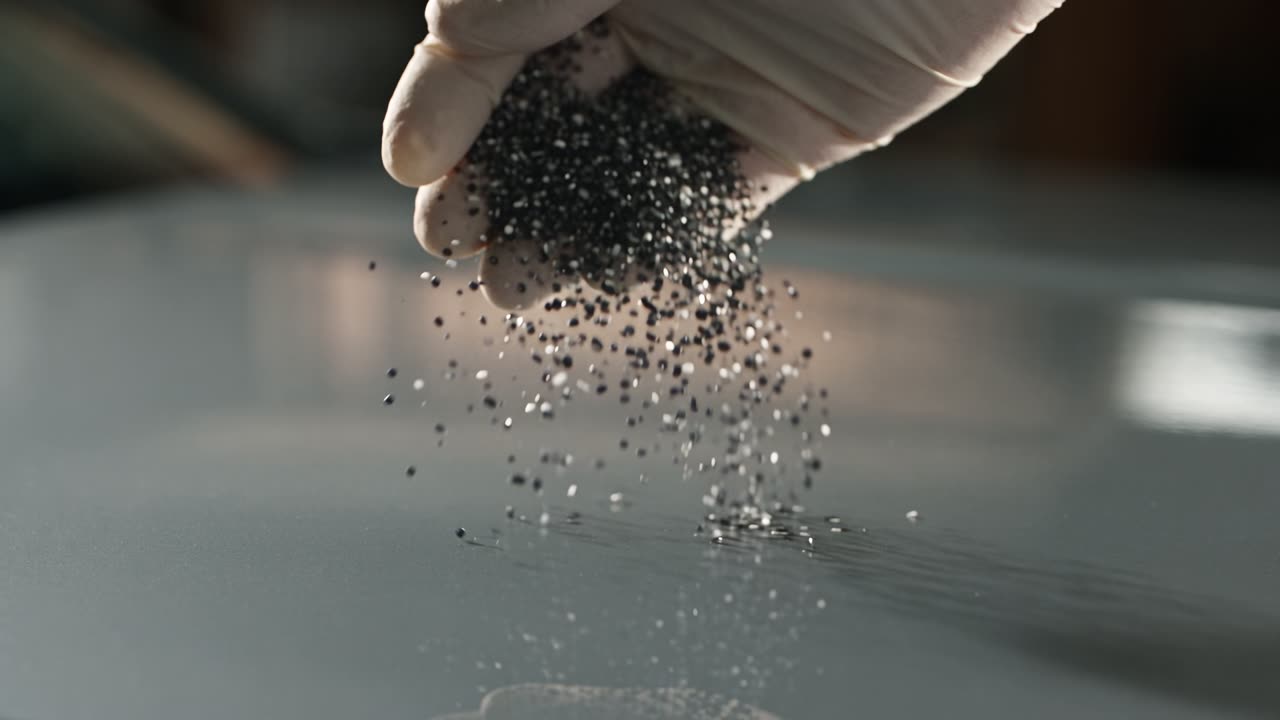
Broadcasting looks casual and is anything but. The base coat is rolled out in sections, and the flake is thrown upward by the handful so that it falls like snow and lands flat. Thrown down at the floor, it lands on edge and clumps.
The installer wears spiked shoes and walks in the wet resin, working backwards toward the door so that every part of the floor gets the same amount of flake at the same stage of cure. The edges and the curb are done by hand.
A full two-car garage takes more flake than people guess: roughly a large pail for every few hundred square feet, with the surplus swept up and kept out of the finished floor.
Where flake floors earn their keep
Flake started in garages and has spread to almost any room with a concrete floor.
Flake compared with the other finishes
Flake is not the only resin floor. This is how it sits next to the two finishes people most often weigh it against.
| Full flake | Solid colour | Metallic | |
|---|---|---|---|
| Look | Speckled, granite-like | One flat colour | Marbled, pearlescent, glossy |
| Hides dirt and marks | Very well | Poorly | Poorly |
| Grip when wet | Good, textured | Low unless grit is added | Low unless grit is added |
| Hides slab flaws | Well | Shows them | Needs a very flat floor |
| Thickness | Highest of the three | Moderate | Moderate to high |
| Best room | Garage, basement, workshop | Plant floor, storage, utility | Showroom, salon, finished basement |
General characteristics. Exact performance depends on the product and the slab.
Questions to ask before you choose a flake epoxy installer
Flake floors vary more than their photographs suggest. Five questions sort the good from the cheap.
How is the concrete prepared?
The answer should be diamond grinding, with a vacuum. If it is acid etching or a pressure wash, the floor is at risk before it starts.
Is it a full broadcast?
Ask whether flake is thrown to rejection or sprinkled. Then ask how many kilograms of flake the job includes.
What is the base coat?
A high-solids, two-part resin made for the purpose. Not a water-based paint, and not a thinned primer doing two jobs.
What seals it, and how thick?
A clear, UV-stable topcoat, in enough thickness to bury the flake. One thin coat leaves a rough floor that sheds chips.
What happens to the cracks?
They should be opened, filled and ground flush before the base coat, and you should be told which ones might return.
Looking after a flake floor
A flake floor asks for very little. Sweep it or run a dust mop over it when it looks like it needs it, which will be less often than you expect, because the pattern is so good at hiding dust. When you wash it, use warm water with a small amount of pH-neutral cleaner and a microfibre mop, or a soft deck brush for the garage.
The slight texture that gives the floor its grip also holds onto a string mop, so a flat microfibre pad or a foam squeegee works better. In winter, push meltwater out the door every few days and wash the salt haze off when the weather breaks.
After many years the clear topcoat will show wear in the tire paths and at the door. That is what it is there for. A worn topcoat can be lightly sanded and renewed without touching the flake underneath, which gives the floor a second life for a fraction of the first job.
Questions people ask
What is a flake epoxy floor?
It is a resin floor with coloured vinyl flakes broadcast into a wet base coat and sealed under a clear topcoat. The flake adds thickness, texture and a speckled pattern that hides dirt.
What does full broadcast mean?
It means flake is thrown into the wet base coat until the floor is completely covered and cannot hold any more. It is also called broadcasting to rejection. It gives the thickest, most even and most forgiving floor.
Is a flake floor slippery?
Less than a smooth resin floor, because the flake leaves a light texture. It can still be slippery when wet, so a fine anti-slip additive can go in the topcoat for entrances and wet rooms.
What size of flake should I choose?
Quarter-inch flake is the standard for garages. Eighth-inch gives a tighter, granite-like look that suits basements and washrooms. Larger flake has a bolder, terrazzo feel.
Can I choose my own colours?
Yes. Flake comes in many solid colours that are mixed into blends, and custom blends can be made up. Samples are laid on your own floor before you decide.
Will the flakes come loose?
Not on a properly sealed floor. Loose flake is scraped and vacuumed off before the topcoat, and the clear coat locks the rest in. A rough, shedding flake floor usually means too little topcoat.
Does flake hide cracks in the concrete?
It hides repaired cracks very well, because the pattern breaks up the line. Cracks still have to be filled first, and a crack that keeps moving can show again.
How long does a flake floor take?
A typical garage takes one to three days on site, depending on the resin system and the repairs. Fast-curing polyaspartic systems are the quickest.
Can a flake floor be recoated later?
Yes. When the clear topcoat eventually wears, it can be sanded and renewed without redoing the flake underneath.
Is flake epoxy the same as an epoxy garage floor?
Usually, yes. Most professional garage floors are full-flake systems. Flake can also be used in basements, workshops and commercial spaces, and a garage floor can be finished in a solid colour without flake.
More from Epoxy Floors Ottawa
For the full picture, from surface preparation to cure times, and to watch a floor get coated as you scroll, see the main page for epoxy flooring in Ottawa, or go straight to a service.
Tell us about the floor you want flaked
613-851-7831Call for the quickest answer, or send the form. You will get a call back with the options for your slab and a price.